
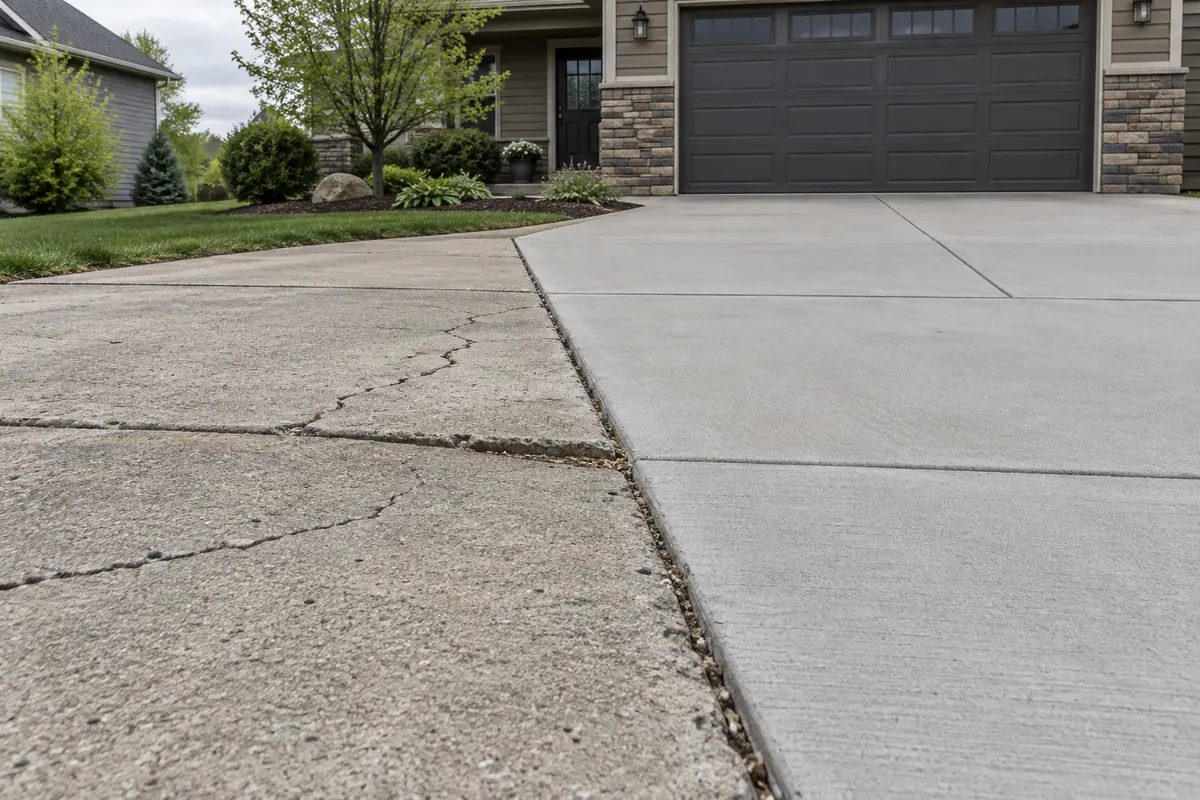
Step 1: find the problem
| What you see | Where the problem is | Usual first option |
|---|---|---|
| Hairline cracks, level on both sides | Surface, drying shrinkage | Leave or seal |
| Light to moderate flaking | Surface, freeze-thaw scaling | Resurface if the slab is sound |
| A panel dropped at a joint, still whole | Base settled or washed out | Lift, then fix drainage |
| Cracks with one side higher, or a rocking panel | Base movement | Lift or replace the section |
| Broken into pieces, widespread deep scaling | Slab and base | Replace |
Step 2: check the concrete underneath
Every repair bonds to or sits on the old concrete, so it can only be as strong as that base (NRMCA CIP 2). Look for hollow-sounding spots and crumbling edges, and ask your technician to check before quoting a resurfacer.
Step 3: find the cause
A fix that ignores the cause is temporary. A downspout that empties at the slab edge, a low spot where meltwater pools, or salt that sits on the surface will undo a patch or a lift. Put the cause fix in the same scope.
Step 4: compare real options
When more than one approach is plausible, ask for both in writing. Replacing only the worst panels, with the rest lifted or sealed, is often a middle path on driveways and walks. See concrete repair, leveling and the cost guide for what each involves.
Age and service life
HomeGuide puts a well-maintained concrete driveway at 30 to 40 years, but no general figure predicts a given Minnesota slab. One that has had heavy salt, poor drainage or no air entrainment can fail early. What the damage shows about the surface and the base matters more than the slab's age.